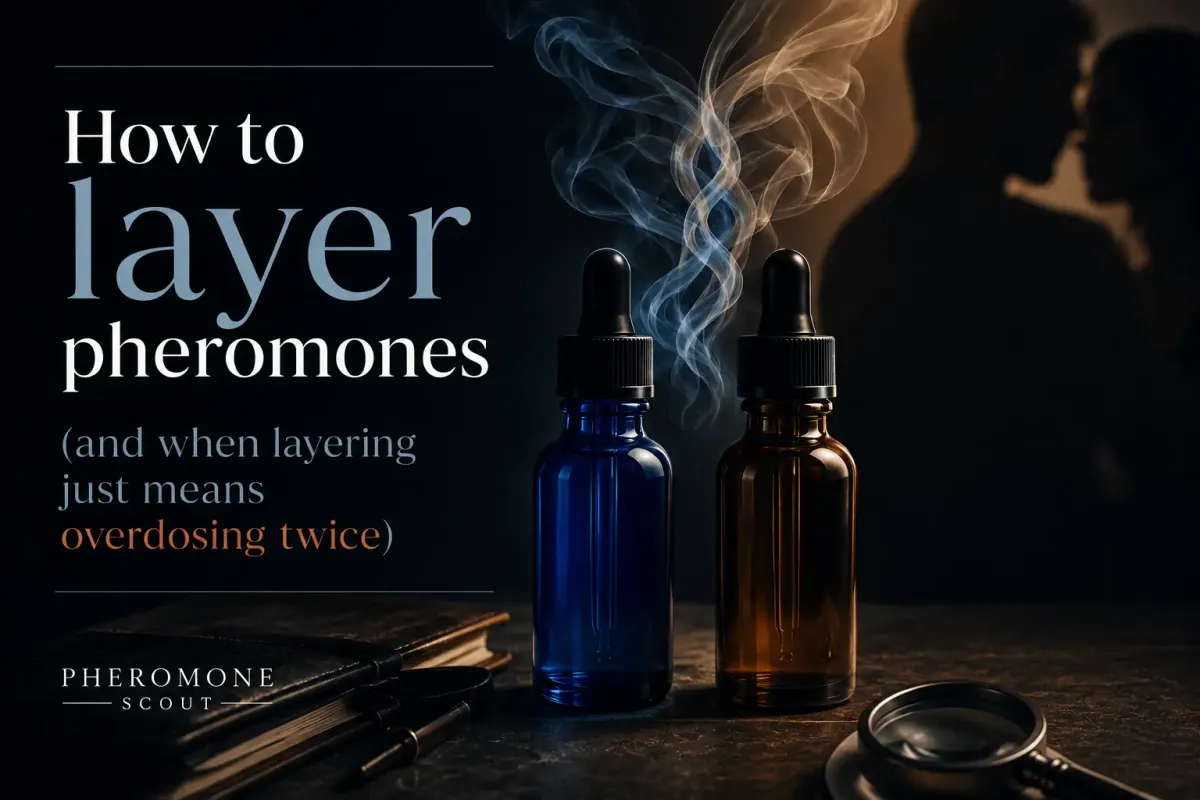
To layer pheromones means something specific in the community: combining two or more disclosed, named-compound products on purpose, for a documented reason. It means something much vaguer in marketing copy, where "stack" gets bolted onto a product name to sound sophisticated without naming a single molecule.
This guide covers the difference, walks through the combos the community actually reports working, and flags the one mistake that turns layering into an accidental overdose.
What does it actually mean to layer pheromones?
It means applying two or more pheromone products together so their compounds combine on skin, and the community only considers it a real technique when both products name what's in them. Vague marketing "stacks" don't count, even when the word shows up in the product name.
S1CK's Alpha Q markets itself as a "20-pheromone micro-stack." Nothing in that phrase tells you which compounds are present or in what ratio, and the brand's own disclosure is thin enough that the number reads as a selling point rather than a formula. Compare that with Pheromone Treasures naming Alpha Androsterone specifically in Swoon's ingredient list. One gives you something to layer against intentionally. The other gives you a marketing phrase.
Which combos does the community actually recommend?
A handful of pairings show up again and again in field reports, and they cluster around a simple logic: pair a dominant compound with a softer one to round off the edges.
Bad Wolf layered with Wolf is the pairing that comes up most, described by one experienced wearer as their personal favorite specifically because Wolf's social, approachable read takes the edge off Bad Wolf's raw dominance. Wolf paired with New Pheromone Additive gets described in the same threads as "leader vibe but still keeps things spicy," combining Wolf's base character with NPA's androstadienone punch. Pheromone Treasures' community reports a similar logic with Captain (8.1/10) and Alpha Treasures (7.5/10): Captain carries the androsterone-driven social leadership layer, Alpha Treasures adds the androstenone-driven attraction layer, and wearers call the pairing a well-rounded day mix.
None of this is lab-tested. It's forum consensus built from repeated, independent reports on the same handful of combinations, which the site treats as a real signal precisely because it keeps showing up across different people rather than one enthusiastic post.
Love Scent's community runs its own version of this logic around Alpha 7 (6.3/10), a seven-compound formula the community describes as "soft androstenone," meaning the alpha effects without the harsher intimidation edge. Wearers pair the unscented version with Scent of Eros, a classic same-vendor combo, and separately recommend adding an androstenol product on top specifically to balance Alpha 7's androstenone character. The unscented version gets picked for this over the scented one for a practical reason: it's easier to layer without a second scent fighting whatever cologne goes on top.
What's the real overdose risk when layering?
Doubling a single compound without realizing it, because two products from different brands can share the same active ingredient under different names. That's the mistake that turns a thoughtful layer into an accidental overdose.
Pheromone Treasures' own community notes flag this directly: Swoon contains Alpha Androsterone, and stacking it with another androsterone-based blend like Captain risks pushing that one compound too high, even though each product alone is dosed reasonably. The community's own phrase for this is "layer carefully." A similar warning shows up around Love Scent's Alpha 7, a seven-compound blend already built around androstenone: pairing it with NPA (also androstenone-forward) is described as workable but risky, and something that "requires careful dosing" rather than a default combo.
The fix isn't complicated. Before layering two products, check what each one actually discloses, and treat two products naming the same compound as one dose split across two bottles, not two separate additions. This is exactly why compound disclosure matters more once you start layering than when you're wearing one product alone: a vague "pheromone blend" label makes it impossible to know what you're actually doubling.
What is the "buildup routine," and does it actually work?
It's a specific community protocol built around NPA: apply it morning and night for several days running, rather than once before going out, and let the compound accumulate rather than trying to peak in a single application. The community shorthand is the "LaCroy buildup routine," named for NPA's manufacturer, and it has its own dedicated forum thread with more than a hundred posts of people comparing notes.
Treat it as a documented field practice, not a clinical protocol. Nobody has run a controlled trial on cumulative androstadienone exposure over a multi-day routine like this, and the reports describing it working are self-reported and impossible to separate cleanly from placebo or simple familiarity effects. It's worth knowing the routine exists before you buy NPA expecting it to work the way a single-spray product does, since the whole design assumes you're not judging it after one wear.
Scented layering versus active-compound layering
Layering a single active-compound product under your existing fragrance is a different, lower-risk move than combining two pheromone products with each other. One just adds a signal underneath a scent you already trust. Combining two active products means managing two formulas' worth of compounds at once, with no fragrance in between to act as a buffer.
If you're layering under a fragrance, apply the pheromone product first to bare skin, give it roughly a minute to settle, then apply your regular scent on top or at an adjacent pulse point. If you're layering two active pheromone products against each other, that's the point where checking both ingredient lists for overlap actually matters, since the interaction is between two potentially similar formulas rather than between a pheromone and an inert fragrance.
Which products are actually built for layering?
A handful of catalog products are explicitly designed as additives rather than standalone wears, and it's worth knowing which ones before assuming every bottle is meant to be worn alone.
Love Scent's New Pheromone Additive (7.3/10) is the clearest example, states its dose plainly (1 mg androstenone, 1 mg androstenol, 1 mg androstadienone per 10 ml), and the community treats it primarily as a booster layered under other products rather than a primary wear. Liquid Alchemy Labs' Nude Alpha Gel (8.6/10) gets used the same way by more experienced wearers, as a foundation layer with other products applied on top of it rather than underneath. Liquid Alchemy Labs' Hypnotica (7.3/10) shows up in the same community threads as Aqua Vitae and Bad Wolf specifically as "the social layer" in a larger stack, rather than a product anyone leads with.
Pheromone Treasures' Grail of Affection turns up in a slightly different version of the same pattern. Its unscented version gets picked specifically to layer underneath a separate cover fragrance, since testers describe the base compound notes (cedar and saffron) as herbal and easy to cover rather than something worth wearing for its own scent. The logic across all of these is consistent: a product built for layering usually tells you so, either through an explicit "additive" framing or through a scent profile that's clearly secondary to the compound underneath it.
How should you layer pheromones without wasting product?
Start with one named-compound product layered under a fragrance you already know, and give it at least a few wears before changing anything. That isolates whether the pheromone layer is doing something before you add a second variable.
Once you've done that, move to a documented two-product combo rather than inventing your own from two random bottles, since the combos the community actually recommends have hundreds of independent field reports behind them and an untested pairing has zero. Check both labels for overlapping compounds first. If they share an active ingredient, treat the pair as one dose, not two.
Bottom line
Real layering is two disclosed products combined for a specific, community-tested reason. A brand's "micro-stack" language on the bottle is not the same thing, and naming a compound count is not the same as naming a compound.
Bad Wolf under Wolf, Wolf with NPA, and Captain with Alpha Treasures are the combos with the most field reports behind them. The single biggest risk is stacking two products that share a compound without realizing it, so check labels before you combine anything. For the scored, disclosed products this guide references, the men's ranked list is where to compare them side by side.