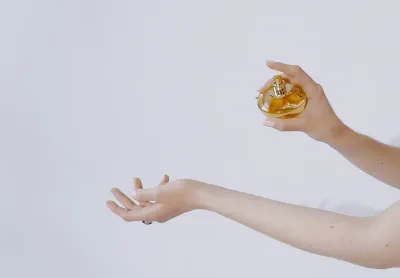
Almost every bad pheromone experience traces back to the same move. The wearer puts on too much. They reason that if a little does something, more does more, and then they spend the evening feeling tense and wondering why the room went cold. These compounds are active at microgram amounts. You are not seasoning a steak. You are dosing something your skin will carry for the rest of the day.
How low should you start?
Start lower than you think. Then go lower than that.
The r/pheromones and Pherotruth crowd has tested these products in the field for years, and the most consistent finding across thousands of reports has nothing to do with which brand you pick. It is dose. One Bad Wolf user applied two wrist pumps, wiped the excess to his neck, and spent the next stretch feeling strange, low, and weirdly submissive. He cut the amount and the bad feeling went away. That is the pattern in miniature.
Overapplying does not crank the effect up. It flips it. The community describes high doses of androstenone-forward blends as amplifying whatever mood you walked in with, and after five or six hours at full dose that can tip into a jittery, irritable state some wearers call roid rage. Bad Wolf carries an explicit community ceiling of about four drops, one per wrist and one behind each ear. Pheromone Treasures Alpha Treasures gets called overpowering past three drops. Overapply in front of someone who matters and the wasted product is the least of what the evening cost you.
If you are still deciding whether any of this is real before you worry about dose, start with our honest take on whether pheromones actually work.
How much pheromone should you apply?
The right number depends on what is in your hand. Oils, sprays, dabbers, and gels all meter differently, and the field reports are specific about it.
| Format | Starter dose | Where it caps for most people |
|---|---|---|
| Oil (dropper) | 1 drop | 2 to 3 drops, less for potent blends |
| Spray | 1 spray | 2 sprays, rarely 3 |
| Dab / roll-on | 1 light dab | 2 dabs |
| Gel | A small amount | Easy to overdo, go light |
Read those as opening bids, not targets. A single drop of Love Scent Primal Instinct spread between the wrists and the sides of the neck was enough for one veteran to feel the vibe he was projecting, calm but present. Love Scent New Pheromone Additive settles around two dabs straight to the neck for most regulars. The number you land on is personal, and you only find it by starting at the bottom and adding one unit per wear until you notice something.
Where do you apply pheromones on your body?
Warm skin with good blood flow does the diffusing. Heat lifts the compounds off you and into the air around you, which is the entire point.
The spots the community comes back to are the neck, the wrists, behind the ears, and the inner elbows. One Primal Instinct user calls the inner elbows and wrists his best diffusion points. Captain wearers like a drop behind each ear, right over the artery. None of this needs to be precise. Pick two or three warm points, apply there, and resist the urge to coat yourself.
Skip your clothes. Pheromones work by warming on skin and reading as part of you, and a cotton collar gives you none of that while staining and holding a stale version of the scent for days. If you must put a spray somewhere other than skin, your skin is still the better bet.
Do you need a cover scent?
For most products, yes. Most of these compounds smell, and not in a way you want leading your introduction. Androstenone on its own gets described as sweaty, musky, boar-like. Women often read raw Bad Wolf as someone's sweat or cat pee, while plenty of men cannot smell it at all, which is exactly how people end up overapplying a thing they cannot detect.
So you cover it. A New Pheromone Additive regular wore his two dabs under Ed Hardy Love and Luck and started getting compliments instead of odd looks. Copulin products and the cinnamon-heavy Alpha 7 get the same treatment. The cover scent is doing real work here, not decoration. If a product ships unscented, that is your job to handle before you walk out the door.
This also connects to honesty in the category. A brand that names its compounds is telling you what you are covering and how much. One that hides behind "proprietary blend" is not. We get into that line between genuine and marketing-grade products separately, and it is worth reading before you spend.
Dose for the room, and how long it lasts
The same bottle wants two different doses depending on where you are going. The Grail of Affection crowd runs lighter for daytime and work, heavier for evening and social settings, and that maps cleanly onto how the effects land. A warm, approachable signal at the office. A stronger, more forward one at the bar.
Where you are going changes the answer as much as which bottle you grabbed. As the community puts it, dose matters, your behavior matters, and so does age, alcohol, mood, the venue, and the person across from you. Pheromones do not override any of that. They nudge. A blend that earns you respect at a family gathering, which is a real report from a Captain wearer, is not the blend you reach for to read flirtatious at a club. Match the molecule and the dose to the setting. If you are still building a rotation, our men's and women's lists sort the catalog by score so you are not guessing.
These also last longer than you expect. One Pheromone Treasures wearer reported residual effects 14 hours after a morning application, including a manager clearing a whole restaurant table for him late that night. Another logged getting unusual treatment at work most of the day off a single dose.
That long tail is why mid-day reapplication is a trap. You stop smelling your own cover scent within an hour because your nose adapts, and you conclude it has worn off. It has not. Topping up is how a sensible morning dose becomes an accidental overdose by 3pm. If you genuinely think it faded, wait. The people around you are still getting it.
How to apply pheromones: a starter routine
Here is the whole thing as a sequence you can run on your first bottle.
1. Pick one warm spot. The side of your neck is the easiest to reach and read.
2. Apply the smallest unit for your format. One drop, one spray, one light dab.
3. If the product is unscented or smells raw, layer a cover fragrance you already own on top.
4. Wear it for a full day and pay attention. Note how you feel and how people respond.
5. Next wear, hold the dose or add exactly one unit. Never jump by two.
6. Once you find your number, split it across two or three points instead of piling it on one.
7. Keep a lighter dose for work and a slightly heavier one for evenings.
The wearers who get the most out of these products found their dose early and stuck to it. Start at the bottom, move up by one unit at a time, and let the smallest amount that works do the work.